China Open 2026: Round of 16 Review — August 11, 2026
August 11 at the China Open 2026 will go down as the day the formbook was torn to shreds. Three last-16 matches, three upsets, three favourites eliminated. John Higgins fell to Stuart Bingham, Zhao Xintong was edged out by Anda Zhang in a heartbreaking decider, and Tom Ford was tactically outmanoeuvred by Chris Wakelin. It was a day that reminded every snooker fan of the sport’s most intoxicating quality: on any given day, anything can happen.
D. Higgins 4:6 S. Bingham | The Upset of the Day
How It Unfolded
The headline result of the day — and one that will reverberate through the rest of the tournament. Stuart Bingham defeated four-time World Champion John Higgins 6-4 in a performance of sustained brilliance that left the Scotsman with no answer. Before the match, the vast majority of pundits and bookmakers had Higgins as the favourite. Bingham took that consensus and systematically dismantled it.
From the opening exchanges, Bingham made his intentions clear. This was not a player content to trade safety and wait for opportunities — this was a player who came to attack, to dominate, and to win. The 2015 World Champion produced some of the most devastating break-building of the entire tournament, sending balls into pockets from every angle with a cue action that looked as smooth and repeatable as a metronome.
The Decisive Moment
The match was finely poised at 4-4, and this was the juncture where experience was supposed to tell. Higgins has been in this position hundreds of times in his career — deadlocked in a tight match, needing to find another gear. It is the situation where legends are supposed to rise. But on this occasion, it was Bingham who found the extra level.
The final two frames were a masterclass in pressure potting. Bingham attacked with a ferocity and precision that simply overwhelmed Higgins, who barely got a look at the table. Every long pot dropped, every positional shot landed perfectly, every tactical decision was the right one. It was the kind of snooker that makes the hairs on the back of your neck stand up — utterly ruthless, utterly clinical, utterly brilliant.
What made Bingham’s performance in those closing frames so remarkable was the context. These were not practice frames — they were high-pressure, tournament-defining frames against one of the greatest players who has ever picked up a cue. And Bingham played them as if they were the easiest thing in the world.
Higgins: A Dignified Exit
For the 51-year-old Higgins, this is a painful but not disgraceful defeat. He lost not because he played badly, but because his opponent played brilliantly. Four frames against Bingham in this mood is a creditable return, and it underlines that Higgins remains competitive at the highest level. But the hard truth is that the margins are getting thinner, and younger, hungrier opponents are finding ways past his defences with increasing regularity.
Higgins has always been gracious in defeat, and this occasion was no different. He knows better than anyone that snooker has days like this — days when your opponent simply doesn’t miss, and no amount of tactical nous or competitive spirit can change the outcome. His departure is a loss for the China Open, which has been robbed of one of its most distinguished competitors. But for Bingham, it is a statement of enduring quality.
What’s Next for Bingham
Bingham advances to the quarter-finals riding a tidal wave of confidence. Beating Higgins — in this fashion, from 4-4, with two frames of devastating brilliance — is the kind of victory that can transform a player’s entire tournament. Bingham knows he can beat anyone when he plays at this level, and the rest of the draw will have taken note. The 2015 World Champion is dangerous, and he is only getting started.
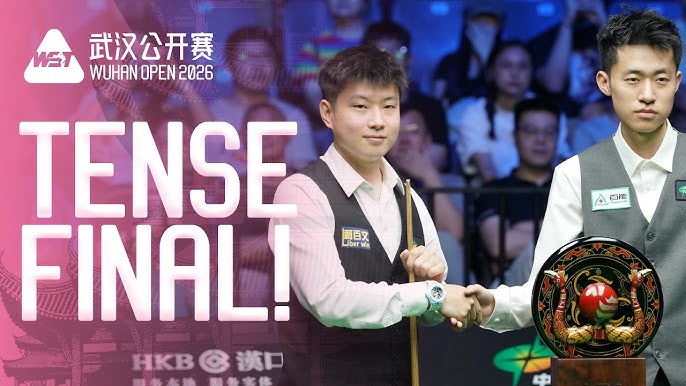
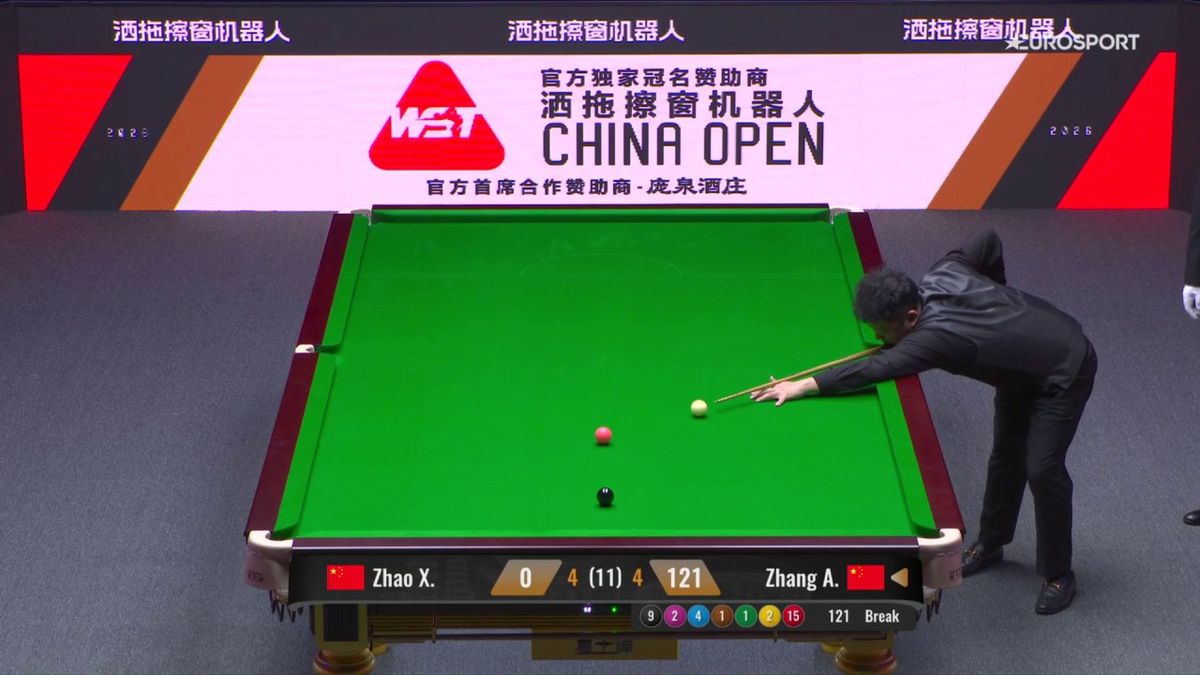
Z. Xintong 5:6 Anda Zhang | Decider Drama
How It Unfolded
If the Higgins-Bingham result was a shock, this match was pure theatre. Anda Zhang produced the biggest result of his career, defeating former UK Champion Zhao Xintong 6-5 in a deciding-frame epic that had everything — momentum swings, pressure pots, missed chances, and a finish that will live long in the memory. This was the kind of match that creates legends, and Zhang grasped the moment with both hands.
The pre-match consensus was clear: Xintong should win comfortably. His talent is undeniable — the UK Championship triumph in 2021 announced him as a generational talent, a player whose silky cue action and instinctive break-building drew comparisons with a young Ronnie O’Sullivan. Zhang, by contrast, occupies the lower reaches of the rankings, a player with limited experience at the sharp end of major events. On paper, there was only one winner.
But Snooker Isn’t Played on Paper
Zhang tore up the script from the very first frame. He played with a fearlessness that bordered on recklessness — going for pots that more cautious players would have rejected, challenging Xintong’s dominance at every turn. And crucially, it worked. The match developed into a seesaw battle, with neither player able to establish a commanding lead. Every time one pulled ahead, the other dragged himself back.
Xintong had his moments of brilliance. There were breaks that reminded you of his extraordinary natural ability — fluid, effortless, beautiful to watch. But the consistency that separates the very best from the merely talented was absent. Since returning from his suspension, Xintong has struggled to maintain the relentless standard required at the top level, and that inconsistency proved fatal in the most important match of his comeback.
Frame 11: The Moment of Truth
The deciding frame was an experience in itself. The tension in the arena was suffocating — every shot greeted with gasps, every miss with audible winces. Both players showed the strain, with uncharacteristic errors from each reflecting the enormity of what was at stake. For Zhang, this was the biggest frame of his life — a chance to record the most significant victory of his career on home soil. For Xintong, it was about survival, about proving that his best days were not behind him.
In the end, it was Zhang who found the composure when it mattered most. His final break was not the biggest or the flashiest, but it was enough — and it was executed under extraordinary pressure. It was the break of a winner. The break of a man who believed in himself when almost nobody else did.
When the final ball dropped, Zhang’s reaction told the story. The raw emotion — relief, joy, disbelief — was written across his face. This was not just a match won; this was a career defined.
Xintong: A Painful Setback
For Xintong, this defeat is a brutal reminder of how far he still has to travel on the road back to the top. The talent remains — that much is obvious every time he picks up his cue. But talent alone is not enough in modern professional snooker. You need consistency, mental resilience, and the ability to handle pressure in deciding frames. These are qualities that can only be rebuilt through competitive experience, and Xintong is still in the early stages of that process.
The danger for Xintong is that defeats like this can compound. Losing a deciding frame to a lower-ranked opponent can plant seeds of doubt that are difficult to uproot. His team and his support network will need to ensure that this setback is treated as exactly that — a setback, not a verdict on his future.
Zhang: A Hero Is Born
Anda Zhang walks away from this match as one of the stories of the China Open 2026. Beating a former UK Champion in a deciding frame on home soil is the kind of fairy tale that sport produces just often enough to keep us all believing. Zhang now knows he can compete with — and beat — the very best, and that knowledge could be transformational for his career.
The home crowd had been desperate for a Chinese hero to rally behind, and Zhang has delivered beyond their wildest expectations. His journey through the tournament takes on a life of its own from here — every match will carry extra weight, extra emotion, extra significance. He is no longer an anonymous qualifier; he is the man who beat Xintong.
K. Wakelin 6:4 T. Ford | The Tactical Triumph
How It Unfolded
The third match of the day produced yet another upset, though this one was achieved through method rather than melodrama. Chris Wakelin defeated Tom Ford 6-4 with a display of disciplined, intelligent, tactically astute snooker that left the more experienced Englishman frustrated and ultimately defeated. Where the other two upsets were driven by emotion and drama, this one was a triumph of preparation and execution.
Ford entered the match as the clear favourite — a seasoned ranking event performer with years of experience at this level. But Wakelin had other plans. From the opening frame, he imposed his own tempo on the match, refusing to be drawn into the kind of open, free-scoring contest that might have favoured Ford’s superior break-building.
A Tactical Masterpiece
Wakelin’s game plan was evident from the start: disciplined safety play, patient accumulation of opportunities, and clinical finishing when chances arrived. He didn’t try to out-score Ford — he tried to out-think him, and he succeeded comprehensively.
What was particularly impressive was Wakelin’s refusal to deviate from his strategy, even when Ford began to find his range. Lesser players might have panicked when the experienced campaigner started scoring; Wakelin simply returned to his blueprint, trusting the process, trusting his preparation. It was the performance of a player who had done his homework and was executing the plan to perfection.
Ford, accustomed to being the tactical aggressor against lower-ranked opponents, found himself in the unfamiliar position of being tactically outmanoeuvred. Wakelin was playing Ford’s own game — patient, methodical, low-risk — but doing it better. Every safety exchange seemed to end in Wakelin’s favour. Every positional battle was won by the underdog. It was death by a thousand cuts, and Ford had no counter.
The Scoreline Tells Only Part of the Story
The 6-4 scoreline suggests a relatively close match, but it doesn’t capture the degree of control Wakelin exercised. He led for virtually the entire contest, and Ford’s four frames felt like temporary reprieves rather than genuine momentum shifts. Wakelin never looked in danger of losing his grip, never appeared rattled by Ford’s mini-fightbacks, and never abandoned his game plan in pursuit of a quick kill. It was mature, composed, and deeply impressive.
The frames Wakelin won were characterised by medium-sized breaks — 50s and 60s — constructed with immaculate positional play. Nothing flashy, nothing spectacular, just perfectly executed, textbook snooker. It may not make the highlight reels, but it wins matches, and it won this one convincingly.
Ford: An Unexpected Exit
For Ford, this is a frustrating result. He travelled to China with legitimate ambitions of a deep run, only to find himself outplayed by an opponent he would have expected to beat. Ford didn’t play badly — he played normally. But normally was not enough against a Wakelin who played the match of his life.
Wakelin: A Statement Win
Wakelin advances to the last eight, and the rest of the draw now knows that this is a player to be reckoned with. This was not a fluke victory snatched against the run of play — this was a methodical, controlled, tactically superior performance from start to finish. If Wakelin can maintain this level, he is capable of progressing deep into this tournament.
Intriguingly, Wakelin’s next scheduled big event is the British Open 2026 at Cheltenham, where he faces none other than Luca Brecel in the first round. After today’s performance, the Belgian World Champion will know better than to take this opponent lightly.
Day Summary: When the Formbook Counts for Nothing
August 11 was a day that served as a powerful reminder of why snooker captivates millions around the world. All three favourites fell, each for different reasons:
- Higgins was overwhelmed by Bingham’s devastating attacking display — the 2015 World Champion was simply unplayable in the closing frames.
- Xintong was edged out in a deciding-frame thriller by Anda Zhang, whose courage and self-belief proved decisive in the most pressurised moment of his career.
- Ford was tactically dismantled by Wakelin, who imposed his own style on the match and refused to let the more experienced player dictate terms.
Results at a Glance
| Match | Result | Verdict |
|---|---|---|
| D. Higgins vs S. Bingham | 4-6 | Upset: Bingham eliminates Higgins |
| Z. Xintong vs Anda Zhang | 5-6 | Decider drama: Zhang stuns Xintong |
| K. Wakelin vs T. Ford | 6-4 | Tactical masterclass from Wakelin |
What This Means for the Tournament
The China Open 2026 has lost one of its biggest names in Higgins and one of its most talented young players in Xintong. In their place, the tournament has gained new heroes: a resurgent Bingham, a fearless Zhang, and a disciplined Wakelin. The draw is now more open than ever, and the quarter-finals promise even more drama.
One conclusion is inescapable: at the China Open 2026, nothing can be taken for granted. Every match is a new story, every frame a new opportunity for the unexpected. And that is precisely what makes snooker the greatest individual sport in the world.
About the Author