What Is Snooker? A Complete Beginner's Guide
You’ve never heard the word “snooker” — or you’ve heard it but never quite understood what it is? You’re in the right place. This article explains everything: what the game is, how it’s played, how many balls there are, what the rules are, and why millions of people around the world can’t tear themselves away from the screen when a tournament is on.
Snooker: What Is It?
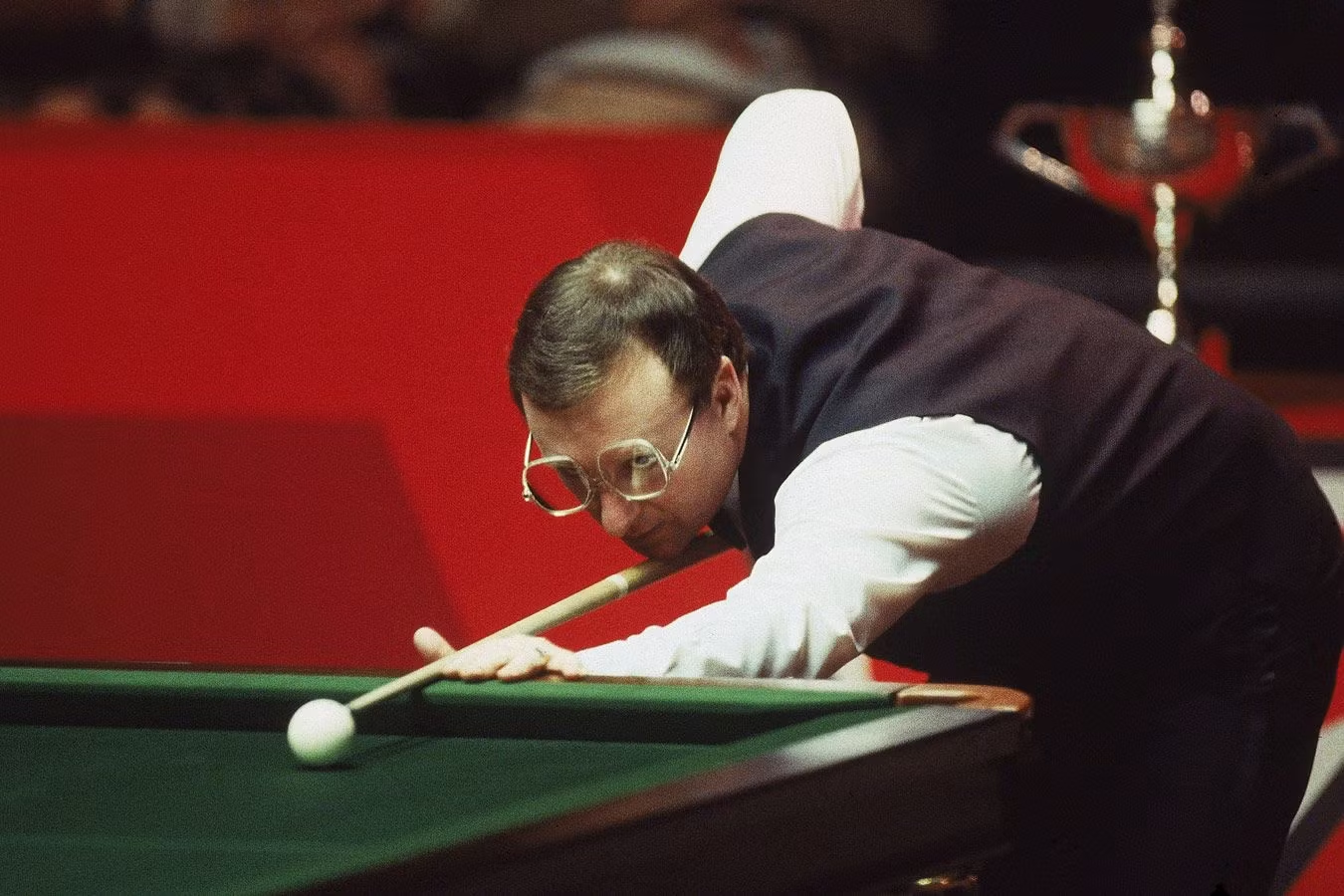
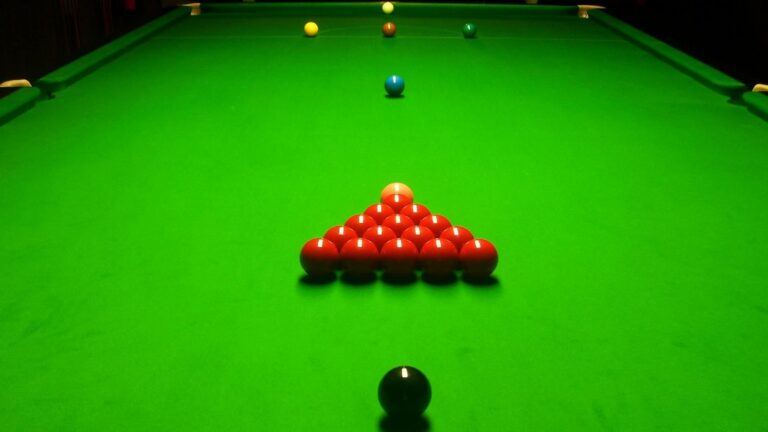
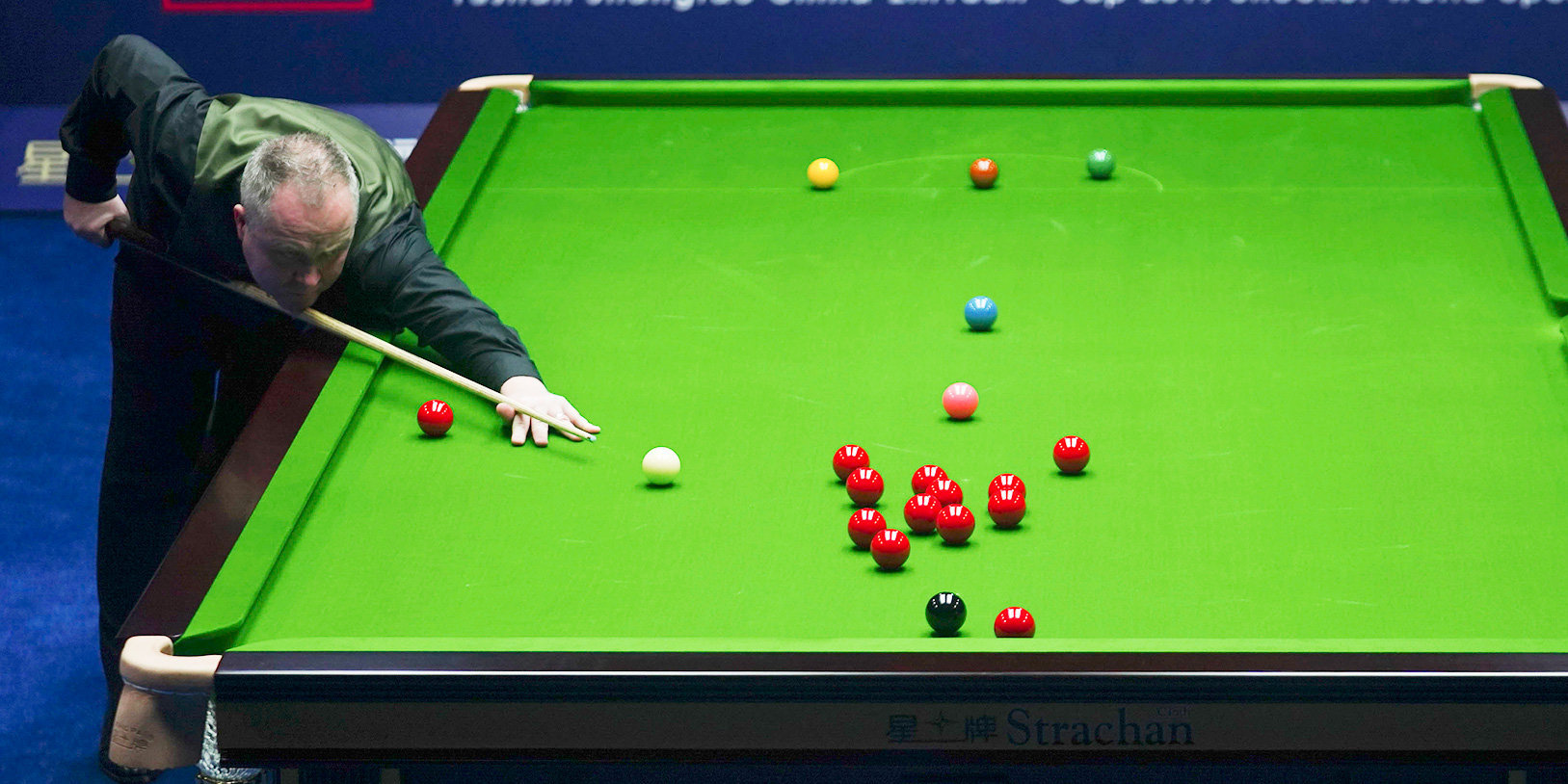
Snooker is a cue sport. Two players compete, each trying to pot balls into pockets using a cue, following a strict order. Whoever scores more points wins. Sounds simple. In reality, it’s one of the most intellectually demanding games in the world. Snooker is played on a large table covered in green baize. The table has six pockets — one at each corner and one in the middle of each long side. On the table are 22 balls of different colours, each worth a set number of points. The player’s task is to pot balls in sequence, alternating reds with colours, accumulating points along the way.
If your question right now is “How is this different from pool?” — the answer, in short: almost everything. The table is bigger, there are more balls, the rules are more complex, and the level of skill snooker demands is on another plane entirely.
Where and When Was Snooker Invented?
Snooker is a British game with Indian roots. In 1875, British Army officer Neville Chamberlain was bored on duty in the Indian city of Jabalpur. To pass the time, he and his fellow officers modified billiards — adding more coloured balls and devising new rules. The prototype of snooker was born. The word “snooker” came from there too. In British military slang, it was a joking term for a raw, inexperienced recruit. When one of the officers missed a shot, Chamberlain shouted: “Why, you’re a regular snooker!” The nickname stuck — first to bad shots, then to the game itself.
By the late 19th century, snooker had spread across the British Empire. In the early 20th century, it became enormously popular in the United Kingdom. With the advent of colour television in the 1970s, it transformed into a mass-audience sport with millions of viewers. Today, snooker is played in more than 90 countries. The largest audiences are in the United Kingdom, China, Thailand, and Australia.
The Snooker Table
The first thing you notice about a snooker table is its size. It’s enormous. A standard professional table measures 12 feet by 6 feet (3.66 m × 1.83 m) — nearly twice the size of a standard pool table. This size difference isn’t just aesthetics. It fundamentally changes the game. On a full-size table, balls are far apart. Every shot demands precision that’s impossible to achieve without years of practice. Positional play — where the cue ball ends up after a shot — becomes critically important.
The cloth is made from fine wool with a directional nap, like very short velvet. The nap runs one way, affecting how balls roll. Experienced players account for this on every single shot. The pockets are narrower than on pool tables — deliberately, to make potting harder. Corner pockets have rounded jaws that forgive fewer errors.
The Balls: How Many and What Each Is Worth
There are 22 balls on the table:
| Ball | Quantity | Points |
|---|---|---|
| White (cue ball) | 1 | — (used for striking) |
| Reds | 15 | 1 point each |
| Yellow | 1 | 2 |
| Green | 1 | 3 |
| Brown | 1 | 4 |
| Blue | 1 | 5 |
| Pink | 1 | 6 |
| Black | 1 | 7 |
If every ball is potted in the perfect sequence, the maximum score is 147 points — the legendary “maximum break.”
Snooker balls are smaller than pool balls: 52.5 mm in diameter, made from hard phenolic resin. A professional-grade set costs several hundred pounds.
How the Game Works: Frames, Breaks, and Matches
The Frame
A frame is one round of play. It begins with all balls in their starting positions and ends when all balls are potted or one player concedes — acknowledging that the deficit is impossible to overcome.
Inside a frame:
- The player strikes the cue ball at a red and tries to pot it.
- If successful — they continue, now potting any colour of their choice.
- The potted colour is returned to its spot (while reds remain), and the player plays another red.
- This red → colour → red → colour sequence continues.
- When all 15 reds are potted, the colours are potted in ascending order (yellow through black). They no longer return.
The Break
A break is the sequence of consecutive pots without a miss. If a player pots ball after ball without giving the opponent a chance to play — that’s a break. A “break of 50” means the player scored 50 consecutive points in one visit.
A century break (100+ points) is a benchmark of excellence. A maximum break (147) — every ball in perfect sequence — is the rarest achievement in snooker.
The Match
A match consists of a set number of frames. “Best of 19” means the first player to win 10 frames wins the match. The World Championship final is best of 35 (first to 18 frames) — and can last two full days.
The Tactical Snooker
Here’s an interesting detail: “snooker” is both the name of the game and the name of a specific tactical play within it. A snooker (as a tactic) is a situation where a player deliberately positions the cue ball behind other balls so the opponent cannot directly hit the required target ball. The opponent is trapped — they can’t play a clean shot and will likely commit a foul.
A foul awards the opponent penalty points (minimum 4, maximum 7). The ability to lay snookers is a separate art form. Some players build entire match strategies around tactical play and snookers rather than simply trying to pot as many balls as possible.
The Cue
A snooker cue is lighter and longer than a pool cue. Standard length: approximately 57 inches (145 cm). Weight: 450–510 grams. The tip is smaller than a pool cue tip — 9–10.5 mm in diameter — allowing for more precise shots and better positional control. The tip is made of leather and requires regular maintenance — it’s chalked before every shot to prevent the cue from slipping on the ball. That blue chalk you see in players’ hands serves exactly this purpose.
Professional players take their cues extremely seriously. Some play with the same cue for decades. Ronnie O’Sullivan, for example, used his favourite cue for over 20 years.
The Referee
Snooker is one of the few sports where the referee stands right next to the players throughout the match. Their duties include announcing the score after every pot, monitoring rule compliance, cleaning and re-spotting balls, and resolving disputes.
Referees wear formal attire — matching the players. Silence in the arena is the norm: spectators, referees, and even commentators often speak in whispers. It’s part of snooker’s unique atmosphere.
Rankings and Tournaments
Professional snooker is organised by the World Snooker Tour (WST), under the governance of WPBSA (World Professional Billiards and Snooker Association). A season (September to May) features approximately 18 ranking events worldwide. After each tournament, players accumulate ranking points based on results. The cumulative total determines their world ranking position.
Rankings matter: the top 16 automatically enter all major events, while everyone else must qualify. The three most prestigious tournaments — the Triple Crown:
- World Championship (Sheffield, April–May);
- The Masters (London, January);
- UK Championship (York, November–December);
Winning all three in a career is the ultimate achievement. Only a handful of players have managed it.
How Long Does a Match Last?
This often surprises newcomers. A snooker match can last a very long time.
- Early-round match: 3–5 hours;
- Quarter-finals and semi-finals: 6–8 hours;
- World Championship final: up to two days, with sessions spread across afternoon and evening.
The longest frame in snooker history lasted 1 hour, 23 minutes, and 41 seconds. The average frame at the World Championship runs about 25–30 minutes.
10 Facts About Snooker That Might Surprise You
- The name “snooker” originated as an insult — it was British Army slang for an inexperienced recruit.
- The fastest maximum break (147) was made by Ronnie O’Sullivan in 1997 — in 5 minutes and 20 seconds. The referee could barely keep up.
- Joe Davis won the World Championship 15 times — but all between 1927 and 1946, when the field was much smaller.
- Stephen Hendry and Ronnie O’Sullivan share the modern record with 7 world titles each.
- Jimmy White reached six World Championship finals and never won — the unluckiest finalist in history.
- The Crucible Curse: no first-time world champion has ever successfully defended the title the following year. The streak has continued since 1977.
- At the 2026 World Championship, a record 11 mainland Chinese players reached the final stages.
- The longest frame at the 2026 Crucible lasted 100 minutes and 21 seconds — between Mark Allen and Wu Yize.
- Snooker is officially recognised by the IOC but is not yet an Olympic sport.
- Players wear waistcoats and bow ties at tournaments — even for a Tuesday afternoon session. It’s a tradition that’s fiercely preserved.
Why Is Snooker So Popular?
Snooker brings together several qualities rarely found in a single sport:
- Precision. Every shot demands surgical accuracy — a millimetre off and you can lose the frame or the match.
- Strategy. Players think several shots ahead — not just how to pot the next ball, but where the cue ball must end up afterwards.
- Psychology. Snooker is a battle of nerves. A match that seemed won after hours of play can turn in minutes. Self-control is as important as technical ability.
- Spectacle. When a top player is in form, it’s genuine artistry. They move around the table, choose position, lean in — and the ball flies into the pocket. Then another. And another. A run of 50, 70, 100 points without a single error captivates even first-time viewers.
- Silence. This sounds strange, but the silence is part of why people love snooker. In the arena, there’s near-total quiet. Spectators don’t shout. They don’t clap during a shot. This concentrated, respectful atmosphere is unique in major sport.
The Bottom Line
Snooker is a cue sport for two players on a large table with 22 balls. The goal is to score points by potting balls in a set sequence (red — colour — red — colour) and outscore your opponent.
But if someone asks “what is snooker?” — the most honest answer is this: it’s a game you can’t understand in five minutes, but one you can’t love by halves. Either it captivates you — or it doesn’t. And if you’ve read this far, it probably does.
About the Author