Snooker vs Pool vs Billiards
It’s the question every snooker fan hears at least once: “Isn’t that just the same as pool?” The short answer: no. The long answer is this article. Snooker, billiards, and pool are three separate cue sports. They share common roots but differ in almost everything: table size, number of balls, rules, difficulty level, and culture.
First: What Does “Billiards” Actually Mean?
An important clarification. In everyday English, “billiards” is sometimes used as a catch-all term for any game played with a cue and balls. But in international terminology, billiards refers to a specific discipline:
- Carom billiards — a table with no pockets, three balls. The player must strike their cue ball so it contacts both other balls. No potting at all.
- Pool — a smaller table, 9–16 numbered balls, wider pockets. This is the game you’ve seen in bars and clubs.
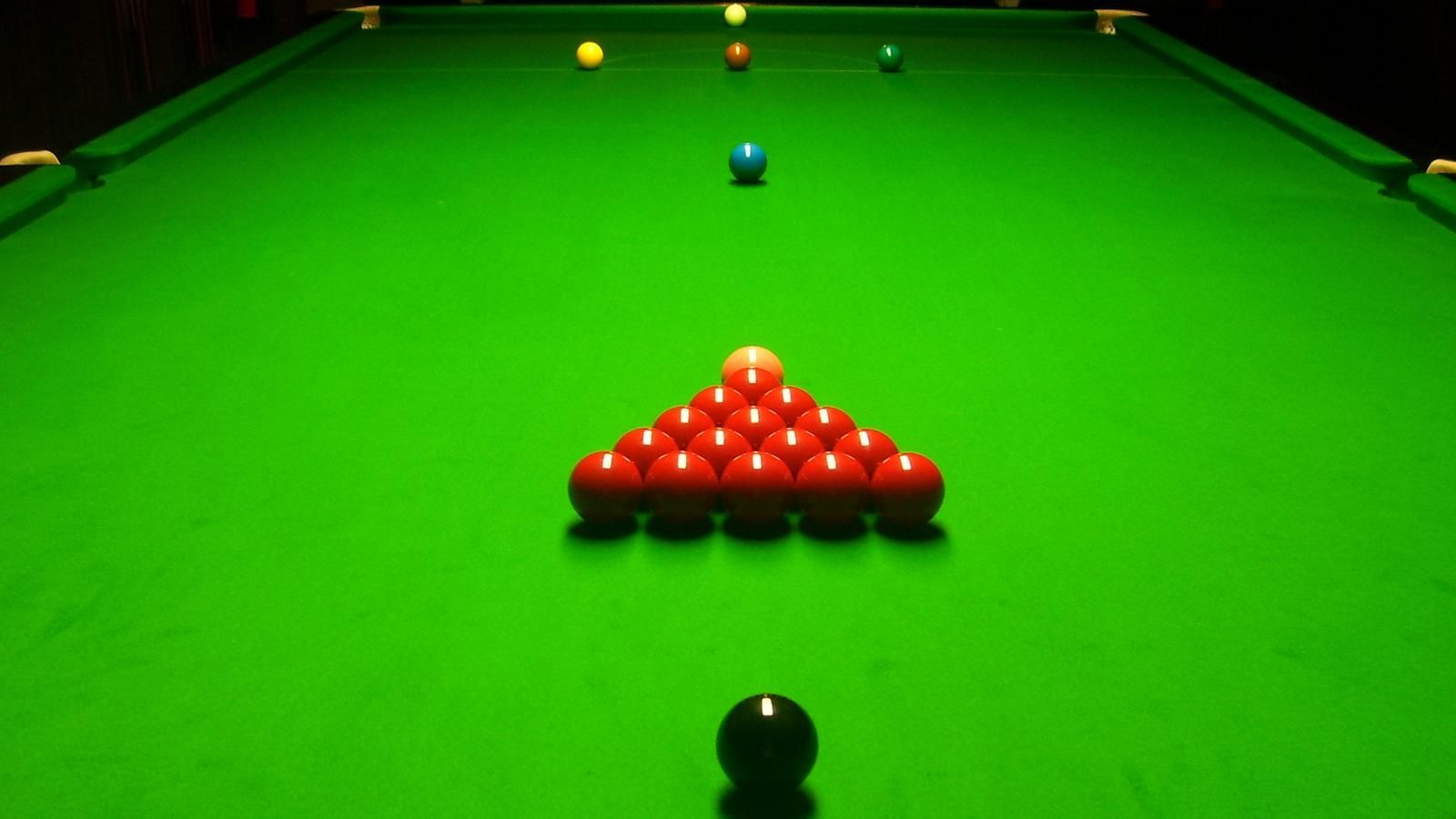
- Snooker — a large table, 22 balls of different colours, narrow pockets, complex rules. This is what we’re here to talk about.
Table Comparison
Size
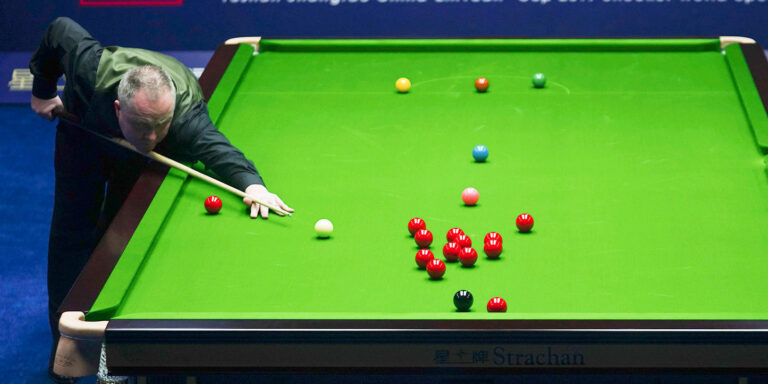
This is the most visible difference. A snooker table is 12 feet long (3.66 m × 1.83 m) — nearly twice the size of a standard pool table.
| Game | Table size |
|---|---|
| Snooker | 3.66 × 1.83 m (12 × 6 ft) |
| Pool (tournament) | 2.74 × 1.37 m (9 × 4.5 ft) |
| Carom billiards | 3.05 × 1.52 m (no pockets) |
The size difference isn’t cosmetic. It fundamentally changes the game. On a full-size snooker table, the distances between balls are much greater. Every shot demands a level of precision that’s impossible to develop without years of practice. Positional play — where the cue ball ends up after a shot — becomes critically important.
Pockets
Another fundamental difference. Snooker pockets are narrower and have rounded jaws that are less forgiving. The player must strike at a more precise angle. Pool pockets are wider and more generous — a slightly off-angle shot can still drop. In snooker, there’s no such forgiveness.
Cloth
Snooker tables are covered with napped cloth — a fine wool fabric with a directional pile, like very short velvet. The nap runs in one direction, which means the ball rolls slightly differently depending on the direction of the shot. Experienced players factor in the nap on every stroke. Pool tables typically use a smoother, nap-free cloth — balls roll faster and more predictably.
Ball Comparison
| Game | Number of balls | Ball diameter |
|---|---|---|
| Snooker | 22 (15 red + 6 colour + 1 white) | 52.5 mm |
| Pool (8-ball) | 16 (15 numbered + 1 white) | 57.15 mm |
| Carom billiards | 3 | 61.5 mm |
Note: snooker balls are smaller than pool balls, even though the table is larger. Smaller balls, bigger table, narrower pockets — everything compounds the difficulty.
Rules: Where the Biggest Differences Lie
Potting Sequence
In snooker, there’s a strict mandatory alternation: red first, then any colour, then red again, and so on. Hit the wrong ball — it’s a foul. In pool, rules vary by game type (8-ball, 9-ball, 10-ball), but generally the player chooses a group (stripes or solids) and pots them in any order.
What Happens After Potting
In snooker, colours are re-spotted after being potted — as long as reds remain on the table. Only when all reds are gone do the colours stay down. In pool, a potted ball stays in the pocket permanently.
Fouls and Penalties
In snooker, the foul system is its own discipline. A foul awards the opponent a minimum of 4 penalty points — even if the error involved a 1-point red. This means a single bad shot can cost more than several successful pots. In pool, penalties are generally simpler — the opponent gets ball-in-hand or an extra shot.
Which Is Harder?
Snooker is objectively more difficult:
- Larger table — greater distances, more room for error on every shot;
- Smaller balls in narrower pockets — tighter margins;
- More complex rules — constant awareness of sequence, score, and penalties;
- Positional play — in snooker, potting a ball isn’t enough. You must calculate exactly where the cue ball will end up, planning several shots ahead, like chess;
- Duration — matches last hours. Concentration and mental stamina matter as much as technical skill.
Steve Davis, six-time world champion, once said: “Snooker is chess with balls.” It remains the most accurate description anyone has given.
Culture and Tradition
Snooker and pool differ not just technically but culturally.
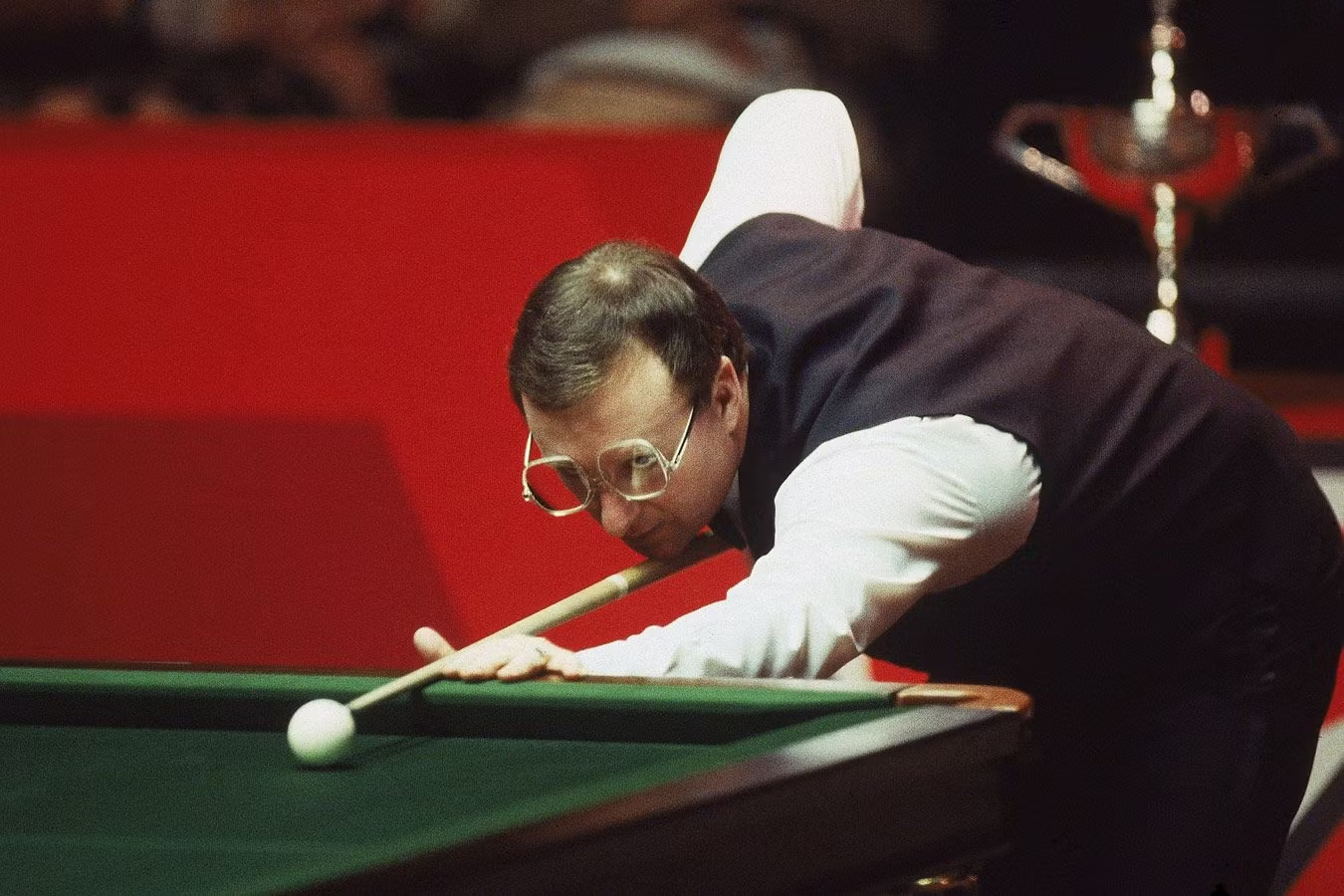
Snooker — a refined, formal sport. Players wear waistcoats and bow ties. The arena is silent. Applause comes only between shots, and it’s restrained. Even a mobile phone in a player’s pocket is prohibited during a match.
Pool — more casual, more relaxed. Played in bars and clubs, in regular clothes. Noise is normal. The atmosphere is social and informal.
Both are legitimate sports. But the experience of watching — and playing — couldn’t be more different.
Summary: The Key Differences at a Glance
| Parameter | Snooker | Pool |
|---|---|---|
| Table size | 3.66 × 1.83 m | 2.74 × 1.37 m |
| Number of balls | 22 | 16 |
| Pocket width | Narrow | Wide |
| Difficulty | Very high | Medium |
| Match duration | Hours | 20–40 minutes |
| Popularity | UK, China, Australia, Thailand | USA, worldwide |
| Dress code | Formal (waistcoat, bow tie) | Casual |
Snooker is not “bar billiards.” It’s a separate sport with its own culture, its own rules, and thousands of hours of training behind every professional player. Watch one match at the World Championship and you’ll understand why millions of people consider it one of the most captivating spectacles in sport.
About the Author